
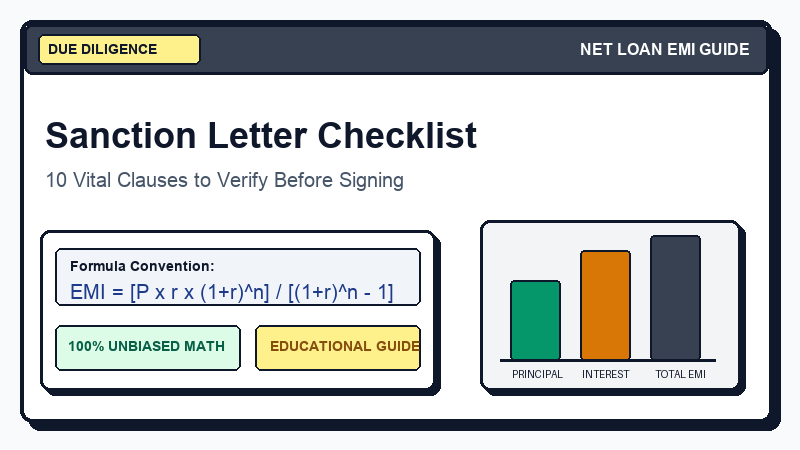
The Moment of Truth: Reviewing the Sanction Letter
Receiving loan sanction approval is an exciting milestone. However, in the excitement of securing financing for a home, car, or business expansion, many borrowers rush through the paperwork and sign agreements without thoroughly reviewing the terms.
A loan sanction letter or Key Fact Statement (KFS) is a legally binding contract that outlines the rules governing your debt for years or decades to come. Below is an essential 10-point checklist every borrower should verify before signing.
The 10-Point Sanction Letter Audit Checklist
1. Disbursal Principal vs. Sanctioned Amount
Verify whether the stated loan amount is the gross sanctioned amount or the net proceeds you will receive. Ensure that administrative fees or mandatory insurance charges have not been added to your principal without your explicit written authorization.
2. Benchmark Rate and Spread Specification
If your loan is on a floating rate, verify the exact formula: Total Interest Rate = External Benchmark Rate + Spread. Confirm that the spread is clearly documented as fixed or subject to lender reset conditions.
3. Reset Frequency Timeline
Confirm how frequently floating interest rates adjust (e.g., quarterly on the 1st of January, April, July, and October). Clarify whether interest rate cuts by central banks are passed along immediately.
4. Processing Fee Terms
Verify that the processing fee matches your initial quote. Clarify whether any upfront appraisal or administrative fees are refundable if property legal verification encounters title issues.
5. Prepayment & Foreclosure Clauses
Review the exact wording regarding part-prepayments. Confirm that there are zero penalties for prepaying floating-rate consumer loans, and check minimum lock-in periods on personal or auto loans.
6. Penal Interest for Late Payments
Check the penalty rate assessed on overdue installments. Typical penal interest ranges from 1% to 2% per month on the overdue installment amount.
7. Repayment Mode & Mandate Details
Check the automated electronic clearing mandate (ACH/NACH) schedule. Confirm the specific billing date (e.g., the 5th or 10th of the month) so you can align automated deductions with your salary deposit schedule.
8. Encumbrance & Collateral Title Release
For secured mortgages or gold loans, examine the timeline for the physical return of title deeds or pledged ornaments following full loan payoff. Leading banking regulators require lenders to release physical title documents within 30 days of debt satisfaction.
9. Mandatory Insurance Bundling Disclosures
Look closely for bundled insurance products. While property hazard insurance is standard for mortgages, lenders cannot legally condition loan approval on purchasing proprietary life insurance policies through their preferred affiliates.
10. Dispute Resolution & Ombudsman Access
Verify the contact details for the lender's Grievance Redressal Officer and the regulatory banking ombudsman in your jurisdiction.
Always verify your monthly payment calculations independently on our Universal EMI Calculator before executing loan agreements.